
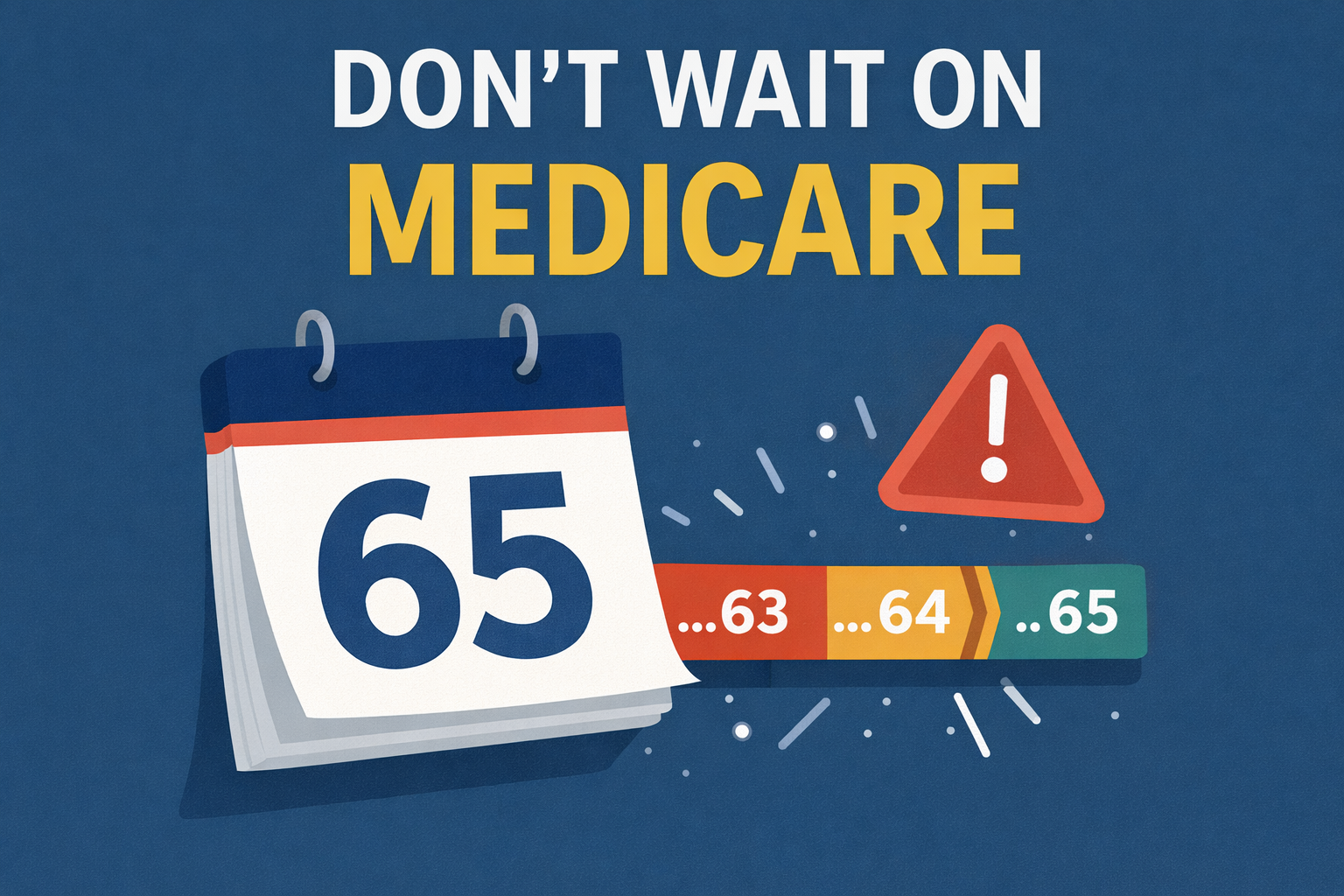
Pre-Medicare Planning Checklist: 6 Costly Mistakes to Avoid Before 65
6 common Medicare “gotchas” to avoid before 65 (plus a bonus strategy most people miss)
Why Medicare should not be a last-minute decision
Many families plan Social Security years in advance but treat Medicare as a quick decision right before 65. That approach can lead to higher costs, missed deadlines, and avoidable stress.
Medicare is most effective when it’s planned inside the retirement income plan—coordinated with:
- Your retirement cash flow (what comes from savings vs. guaranteed income)
- Tax planning and income timing (including the potential impact of IRMAA)
- Provider access and lifestyle needs (travel, multiple residences, preferred doctors)
- Risk planning (unexpected health events and out-of-pocket exposure)
The 6 pre-Medicare “gotchas” to plan for
1) Doctor and hospital access can change based on the path you choose
If you strongly prefer specific doctors or a particular hospital system, you need to confirm participation early. Some options offer broader flexibility, while others rely on local networks that may change year to year.
- Confirm your must-keep doctors and hospital systems
- Think about travel: will you need coverage that works in multiple states?
- Ask whether referrals or prior authorizations are required
2) HSA contributions must stop once Medicare coverage begins
If you (or your employer) are contributing to an HSA, Medicare timing matters. Once you enroll in Medicare, HSA contributions generally must stop starting the first month of coverage.
- Coordinate HSA strategy with your Medicare start date
- Be careful if you plan to claim Social Security later (Medicare Part A can be retroactive in some situations)
- Confirm employer contribution timing to avoid corrections later
3) IRMAA can raise Part B and Part D premiums (and it’s often based on older tax years)
Higher-income households can pay more for Medicare Part B and Part D due to IRMAA. Because IRMAA is typically tied to prior-year tax data, it can surprise retirees whose income has recently dropped.
- Plan income timing intentionally during the retirement transition
- Coordinate Roth strategy and distribution planning to reduce future “surprise” premium increases
- If you retire and income drops, you may be able to request reconsideration in the right circumstances
4) COBRA after 65 can cause enrollment timing problems
COBRA can be helpful when you retire before 65, but it can create problems if you rely on it after 65 and miss your Medicare timing window.
- Confirm when employer coverage ends (the date matters)
- Map Medicare enrollment deadlines before you retire—don’t assume COBRA “counts the same” as employer coverage
- Avoid gaps: missing the window can lead to delayed coverage and penalties
5) Retiree health plans often become secondary at 65
Retiree coverage may change at 65. In many cases it becomes secondary to Medicare—meaning you may need Medicare in place for the retiree plan to work as intended.
- Confirm how the retiree plan coordinates with Medicare
- Verify prescription coverage rules (and whether it is creditable coverage)
- Don’t assume retiree coverage works the same after 65
6) Medigap open enrollment is a limited window
If Original Medicare plus a Medigap supplement is part of your plan, timing is crucial. You typically get a limited enrollment window around Part B enrollment where acceptance is easier. After that, switching can become more difficult depending on your state and health.
- Coordinate Part B timing carefully (especially if you keep employer coverage past 65)
- Don’t miss the enrollment window if Medigap flexibility is important to you
- Plan for the long-term: what works at 65 should still work at 75
Bonus Gotcha: Your first Medicare choice can affect your ability to change later
Many people assume they can switch between Medicare Advantage and Original Medicare + Medigap anytime.
In reality, returning to Medigap later may require medical underwriting unless you qualify for a protected enrollment right.
In some cases, people who start with Medigap and try Medicare Advantage for the first time have a limited 12-month “trial right” to switch back.
The key takeaway: don’t treat Medicare as a reversible one-time purchase—plan the decision inside your retirement income strategy.
A simple timeline: what to do and when
Use this as a planning checklist—not a last-minute scramble.
Ages 60–63: Build the foundation
- Estimate retirement healthcare costs (premiums + likely out-of-pocket)
- Identify potential IRMAA exposure and discuss tax-aware strategies early
- Start the long-term care conversation as part of risk planning
Age 64 (or 12 months before retirement if working past 65)
- Confirm how employer coverage coordinates with Medicare at 65 and at retirement
- Review HSA rules and set a stop-date for contributions if needed
- Review providers, travel needs, and your preferred care access
6 months before Medicare starts
- Finalize enrollment timing (avoid COBRA-related surprises)
- Confirm prescription strategy and any retiree plan coordination steps
- If Medigap is important, confirm your enrollment window and deadlines
How my office helps
My role is to help you make the next right financial decision—then back it up with a coordinated retirement income plan. That includes Medicare planning as part of the bigger picture, not as a one-off purchase.
- Review Medicare timing and employer/retiree coverage coordination
- Evaluate how healthcare choices affect your income plan and taxes
- Coordinate IRMAA-aware planning and retirement distribution strategy
- Connect you with trusted Medicare insurance specialists when appropriate
Ready to talk? Schedule a discovery call, to build a clear action plan for your timeline.
Disclosure
This material is for educational purposes only and is not intended as tax, legal, or Medicare plan advice. Medicare rules, premiums, provider networks, and plan availability can change. For guidance tailored to your situation, consult Social Security and your tax professional.


