
A simple process for building a more resilient retirement strategy
By Bill Kinkel | Genesis Wealth Management Group
Many people approaching retirement or already retired have accumulated savings, investment accounts, workplace retirement plans, IRAs, or brokerage accounts. They may even check their account balances regularly and use online planning tools to estimate whether they are “on track.”
But having investments is not the same as having a retirement plan.
One of the most common things I notice when people visit my office is that they often do not have a clearly defined retirement plan. In many cases, they have pieces of a plan – investment accounts, Social Security estimates, Medicare questions, tax concerns, estate documents, and income goals – but those pieces have not been organized into one coordinated strategy.
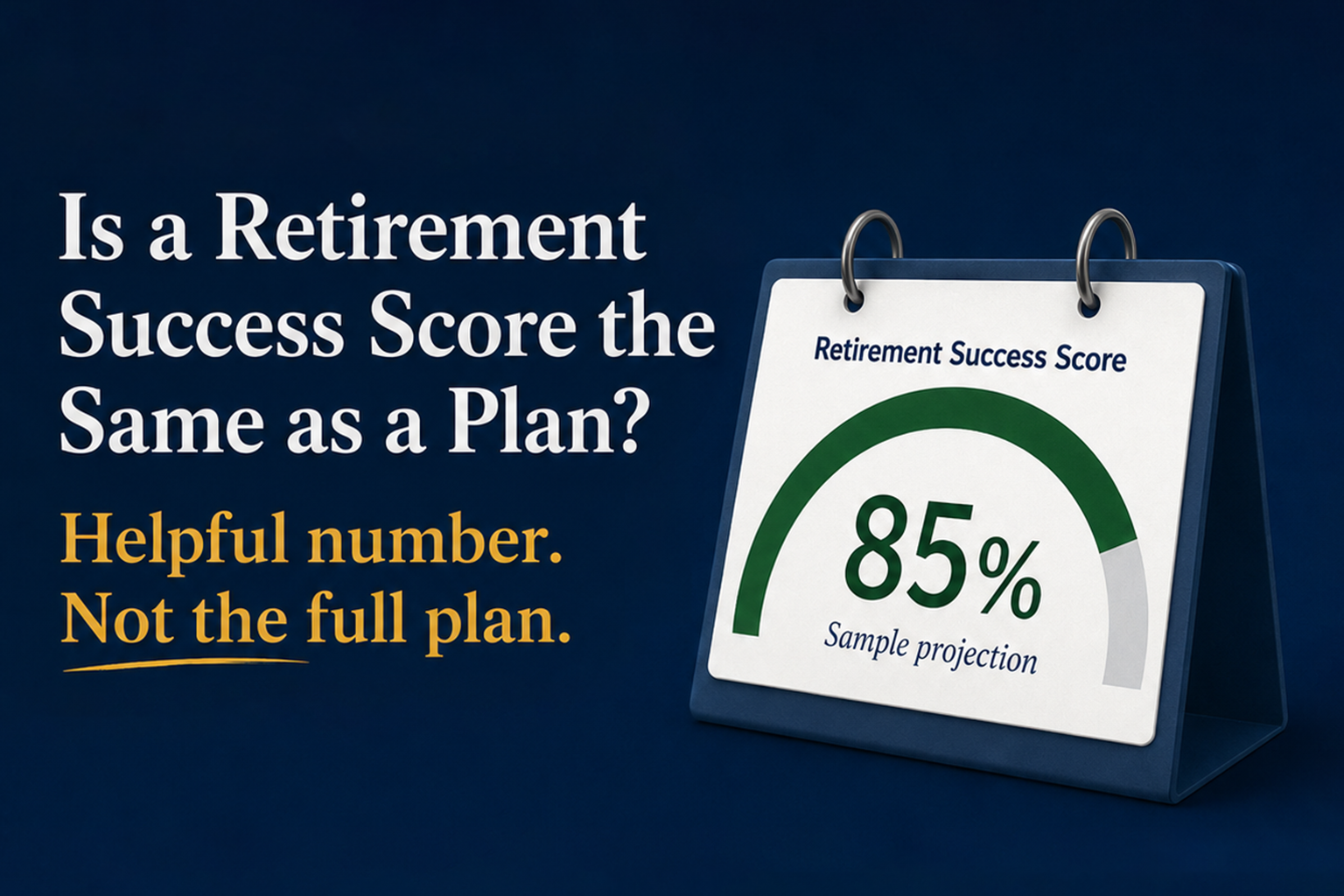
Another common point of confusion involves Monte Carlo projections. Many online brokerage platforms provide a probability-of-success number, often expressed as a percentage. While that number can be helpful, it should not be mistaken for a complete financial plan.
A retirement plan should go deeper.
A Retirement Plan Should Answer More Than One Question
A meaningful retirement plan should help answer questions such as:
- Will my income be dependable throughout retirement?
- How will taxes affect my withdrawals?
- When should I claim Social Security?
- How will Medicare and healthcare costs fit into the plan?
- Are my investments aligned with my actual income needs?
- What happens if markets are down early in retirement?
- Are my beneficiaries, account titles, and estate planning documents coordinated?
Retirement Planning Starts With What Matters Most
A resilient retirement plan should begin with values, not products.
Before discussing investments, it is important to understand what matters most to you and your family. Retirement is not just a financial transition. It is a lifestyle transition. For some people, the priority is dependable income. For others, it may be travel, helping children or grandchildren, charitable giving, reducing financial stress, or leaving a legacy.
Once those values are clear, the next step is defining goals by timeframe. Short-term, mid-term, and long-term goals may require different planning strategies. Some decisions need attention right away, while others can be addressed later as the plan develops.
That distinction matters because retirement planning is not just about reaching retirement. It is about staying retired with confidence.
Organizing the Financial Facts
A retirement plan becomes much more useful when the financial facts are organized.
That includes income sources, investment accounts, retirement accounts, Social Security estimates, pensions if applicable, insurance policies, tax returns, estate documents, beneficiary designations, and expected retirement expenses.
This step often reveals gaps that people did not realize existed. For example, an account may have an outdated beneficiary. A retirement income estimate may not account for taxes. A healthcare decision may create additional costs. Or an investment account may not be aligned with the role it needs to play in retirement.
A good planning process brings those details together.
Reviewing Key Planning Considerations
Retirement involves several connected decisions. Cash flow, taxes, healthcare, long-term care considerations, estate planning, inflation, market volatility, and longevity risk all influence the strength of a retirement plan.
Looking at each item separately can lead to missed opportunities or unnecessary risk. For example, an investment decision can affect income taxes. A Social Security claiming decision can affect lifetime income. Medicare decisions can affect retirement expenses. Beneficiary designations can override what someone believes their estate plan says.
That is why coordination matters.
A well-built retirement plan should not treat investments, taxes, healthcare, and estate planning as isolated topics. They should be reviewed together so the plan reflects the person’s real financial life.
Connecting the Plan to the Investments
Many people begin with their investments and then try to build a retirement plan around them. A more effective approach is often the opposite.
The plan should guide the investment strategy.
That means each account should have a purpose. Some assets may be designed for income. Others may be positioned for growth, liquidity, tax efficiency, or legacy planning. The investment strategy should reflect the client’s goals, risk profile, income needs, and timeframe.
This is where the difference between risk tolerance, risk capacity, and need to take risk becomes important.
Risk tolerance is how much market movement someone feels comfortable with. Risk capacity is how much risk the plan can financially afford. Need to take risk is the level of return required to help meet the plan’s goals.
A retirement plan should consider all three.
Why Monte Carlo, The Percent Success You See, Is Helpful – But Not Enough by Itself
Monte Carlo analysis (percent success) is a valuable retirement planning tool. It tests a retirement plan across many possible market conditions and return sequences. Instead of assuming one straight-line rate of return, it helps show how a plan may perform through both favorable and unfavorable markets.
This can be especially important in the years just before and after retirement, when sequence-of-returns risk can have a major impact. Poor market returns early in retirement can be more damaging than the same returns later, especially when withdrawals are being taken from the portfolio.
However, Monte Carlo analysis is only one tool.
A Monte Carlo probability-of-success number does not automatically mean a person has a full financial plan. It may not fully reflect tax strategy, healthcare costs, estate planning coordination, account titling, beneficiary designations, changing spending needs, or how income will actually be withdrawn over time.
In other words, the percentage matters – but the planning behind the percentage matters more.
Adding a Funded Ratio Perspective
Another useful planning tool is Funded Ratio Analysis.
A funded ratio can serve as an on-track scorecard. It compares a household’s current resources and reliable income sources to the estimated value of future retirement spending needs. This can help answer a very practical question:
“Do I have enough to retire and stay retired?”
Used alongside Monte Carlo analysis, funded ratio analysis can provide another perspective. Monte Carlo helps stress test the plan under different market conditions. A funded ratio helps evaluate whether the plan appears adequately funded based on projected needs and resources.
Together, these tools can provide more clarity than relying on a single projection.
Retirement Planning Should Be an Ongoing Process
A retirement plan should not be a one-time document that sits in a folder.
Life changes. Markets change. Tax laws change. Healthcare needs change. Family circumstances change. Goals change.
That is why an ongoing review process is essential. A resilient retirement plan should be reviewed, adjusted, and coordinated over time. The goal is not to predict the future perfectly. The goal is to build a process that can adapt as life unfolds.
The Bottom Line
Retirement planning is not just about having investments, and it is not just about achieving a certain Monte Carlo percentage.
A strong retirement plan should organize your financial life around what matters most, define clear goals, connect your investments to those goals, evaluate key risks, and stress test whether your income strategy can support your desired lifestyle.
For many people approaching retirement, the most important first step is simply getting organized.
A plan built around your real life can help bring greater clarity, confidence, and resilience to one of the most important transitions you will ever make.
If you are retired or approaching retirement and want to better understand whether your income, investments, taxes, healthcare, and estate planning are working together, schedule a discovery call to see if we are a good fit:
https://calendly.com/wkinkel/schedule-a-discovery-phone-call
Retirement Plan FAQs
Is a Monte Carlo projection the same as a retirement plan?
No. A Monte Carlo projection can be useful, but a retirement plan should also consider income, taxes, healthcare, estate planning, account purpose, and ongoing review.
What should a retirement plan include?
A retirement plan should organize goals, income sources, spending needs, investments, Social Security, Medicare, taxes, estate considerations, and key risks such as inflation and market volatility.
Why should investments be connected to the plan?
Each account should have a purpose. Some assets may support income, while others may be positioned for growth, liquidity, tax efficiency, or legacy goals.
How often should a retirement plan be reviewed?
A retirement plan should be reviewed regularly because life, markets, tax laws, healthcare needs, and family goals can change over time.
Bill Kinkel | 618-368-6800
Investment advisory services offered through Genesis Wealth Management Group, LLC, an Illinois Registered Investment Advisor. This material is for informational purposes only and is not tax, legal, or investment advice. Investing involves risk, including possible loss of principal.


